
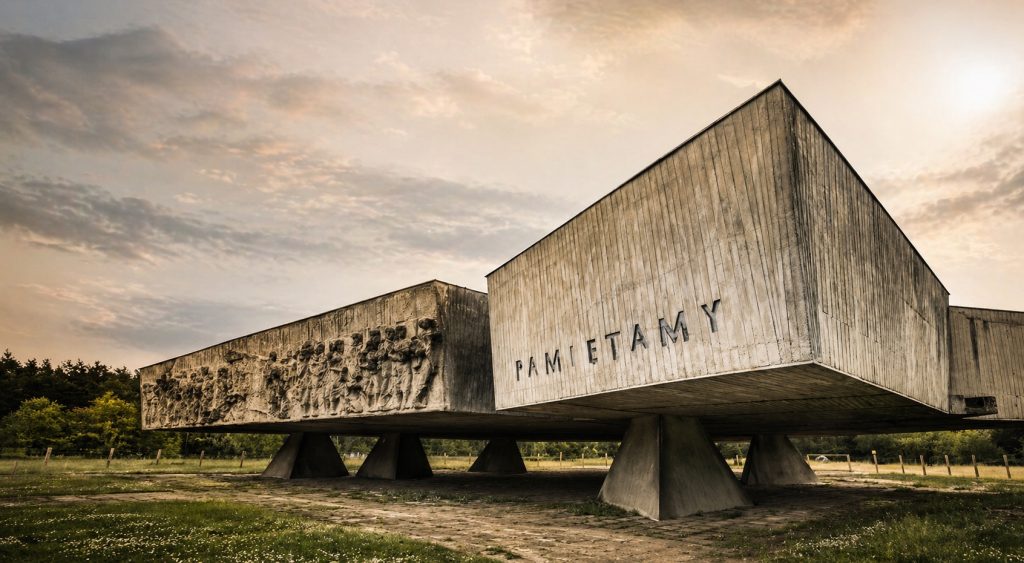
Kulmhof Memorial Tour from Warsaw is a private historical journey to Chełmno nad Nerem, the first Nazi extermination camp, where the machinery of industrial murder began.
Kulmhof was the first Nazi extermination camp — the site where mobile gas vans were first introduced as a method of mass murder, marking the beginning of the industrialized machinery of the Holocaust.
This private experience offers historical depth, personal guidance, and the space to reflect on how the mechanisms of extermination were first developed.
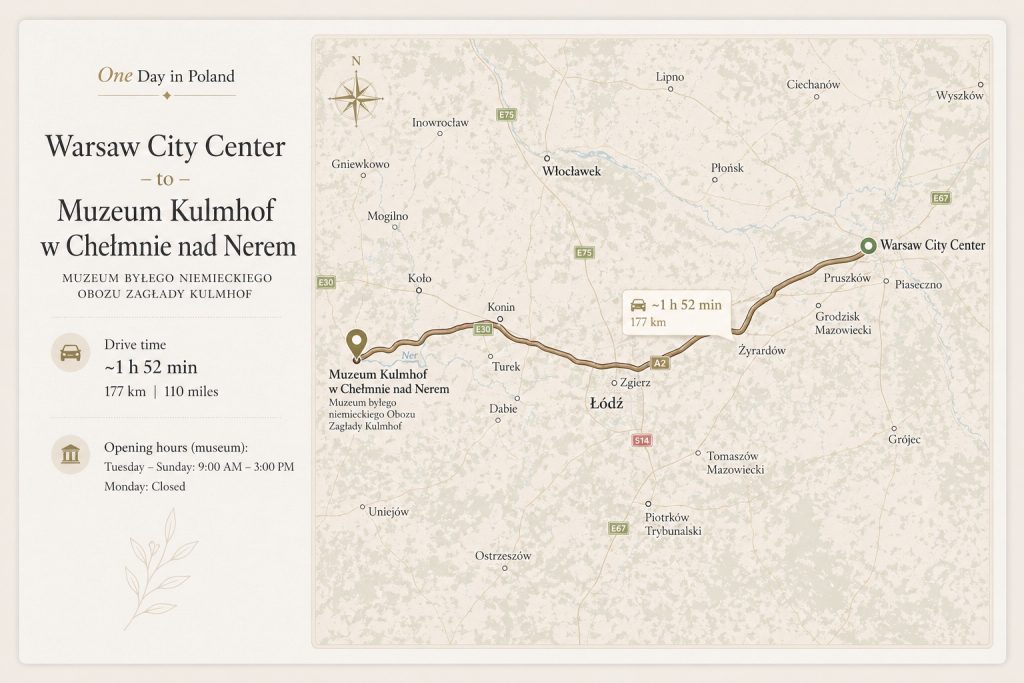
Drive time: ~1h 50 min each way
Visit time: ~2–3 hours
Total tour duration: ~4–5 hours
Opening hours (museum): 9:00 AM – 3:00 PM
A private, unhurried journey
Your private driver will pick you up directly from your hotel or apartment in Warsaw.
The journey to Kulmhof takes approximately 2 hours, allowing time to leave the city behind and prepare for a deeply historical and reflective experience.
The visit begins at the Kulmhof Museum, where you will explore the permanent exhibition and the preserved remains of the reception area, where prisoners were brought upon arrival.
This part of the visit provides essential historical context and explains how the first extermination process was organized.
After the museum visit, we continue along the same route once used by the gas vans transporting victims to the forest burial grounds.
During this 10–15 minute drive, prisoners were murdered inside mobile gas vans before reaching the execution and burial site.
At the forest memorial, you will walk through the preserved area where mass graves and cremation sites were located.
After the visit, you will return comfortably to Warsaw.
The tour ends at your hotel or any preferred location in the city, with time to reflect on one of the earliest and most significant chapters of the Holocaust.
What’s included
What’s included
Everything is arranged for you — so you can focus entirely on the experience.
Not included

Ideal for couples or small groups seeking a quiet, private journey with full comfort.

A perfect solution for families or small groups traveling together, without compromising comfort.
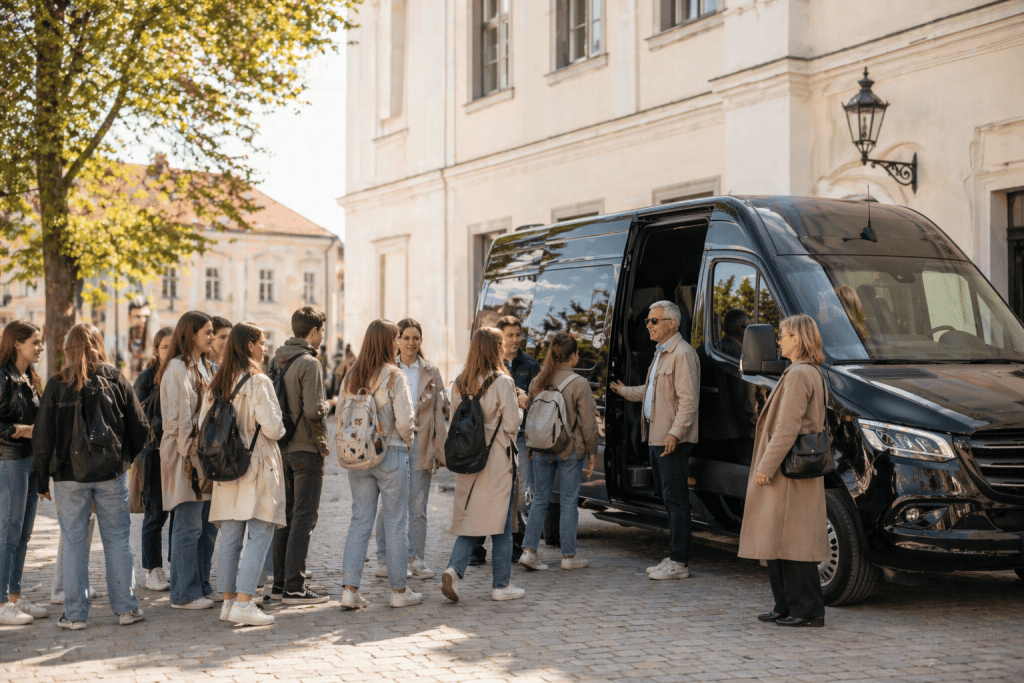
We can also arrange transport and guiding services for larger groups, including minibuses and multi-day itineraries.
Please contact us for a tailored quote.
• Cash (EUR / USD / PLN)
• Credit & debit cards
• Secure online payment (on request)
No hidden fees. No prepayment required for most bookings.
Practical answers before your visit to Kulmhof — planning, timing and what to expect.
Yes. Advance booking is strongly recommended to secure your preferred date and organize private transport from Warsaw. Kulmhof is located off the main tourist routes, so planning ahead ensures a smooth and well-prepared visit.
Kulmhof (Chełmno nad Nerem) was the first Nazi extermination camp, where mass murder by gas vans began in December 1941. It marks the beginning of industrialized killing that later expanded to other death camps.
The tour includes the memorial grounds, museum exhibitions, preserved historical traces and the nearby forest burial site. Together they help explain how the camp operated and how evidence of the crimes was later concealed.
The full private tour usually takes around 6–7 hours, including transportation from Warsaw, guided exploration of the memorial and time for reflection.
Yes. Kulmhof is especially valuable for travellers interested in the early phase of the Holocaust and the origins of Nazi extermination policy. A private format allows for deeper historical context and flexible pacing.
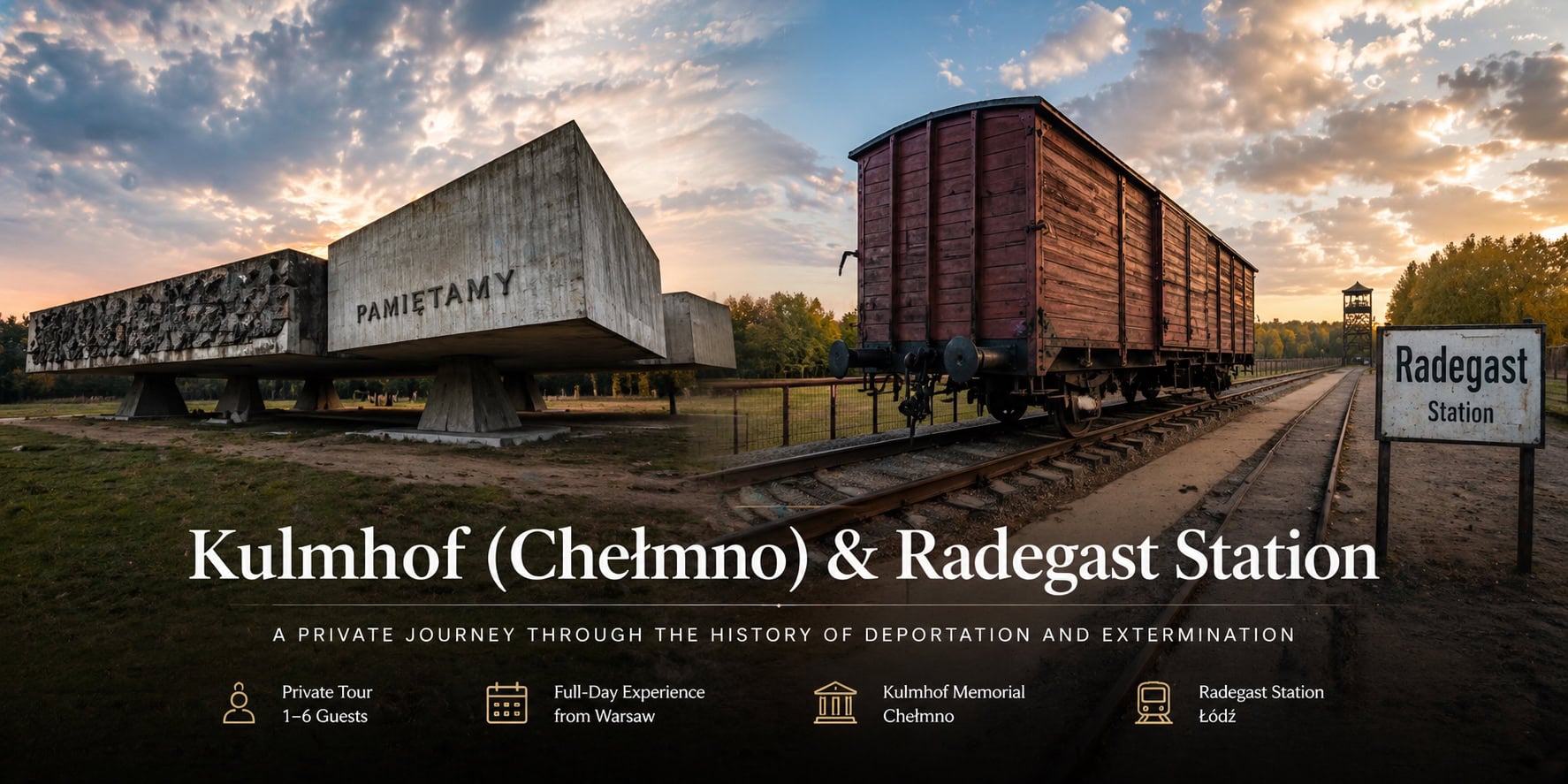
Follow the path of deportation and extermination — from Łódź’s Radegast Station to Kulmhof, where the first mobile gas vans began the machinery of mass murder.
Signature Experience
A comprehensive, multi-day experience designed for those seeking a complete historical perspective.
The most comprehensive WWII tour in Poland —
unmatched by anyone on the market.
5 to 7 days
Minimum: 5 full days of intensive touring
All major camps in Poland
Complete historical coverage
This tour is not offered
by any other company in Poland
For serious travelers, historians,
educators, and researchers
We use cookies to enhance your experience and understand how our website is used.
You can accept all cookies or customize your preferences at any time.